
A Powerless Protection Order?
Does the Constitution provide adequate protection against government encroachment on individual rights?


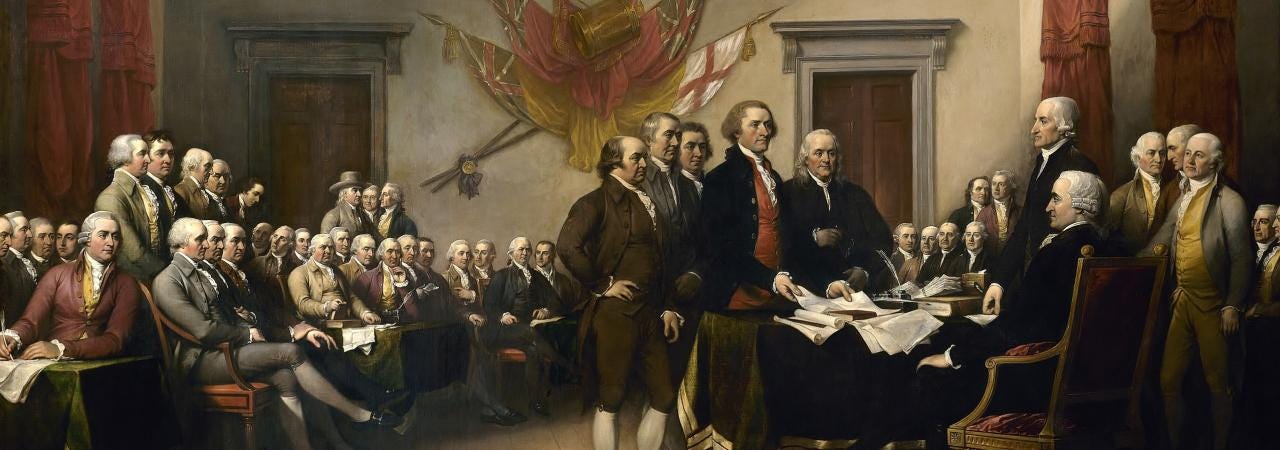
In light of the ever-expanding overreaching government, it becomes apparent that the Constitution, as originally conceived by the founders, may not have possessed sufficient strength to safeguard individual rights and freedoms. Our daily lives now bear witness to state intervention in numerous facets, encompassing everything from income taxes to property levies. While some argue that such intervention is essential for maintaining a functional society, it often veers toward excessive control and manipulation rather than genuine necessity.
Delving into history, we can explore the concerns expressed by the Constitution's framers about the document's power and its potential to thwart a central government's encroachments. James Madison, a prominent figure among the founders, raised questions about the Constitution's efficacy in Federalist #48, when he pondered whether "parchment barriers" alone would suffice to restrain the ambitions of an increasingly powerful government. Madison himself acknowledged that even a robust constitution could be violated if not enforced. His apprehensions extended to observations of repeated violations in Virginia, as he noted in a letter to Thomas Jefferson in 1788, where he decried the disregard for the bill of rights when it clashed with popular sentiment.
Another perspective, as articulated by Lysander Spooner in "No Treason," questions the Constitution's role, suggesting that it either sanctioned the government we have today or proved powerless to prevent its growth. In either scenario, he argues that it becomes unfit to exist.
So, the question arises: Why have a constitution? Under the current constitutional framework, we endure substantial national debt, incarceration of non-violent individuals, significant deductions from our paychecks, limitations on our access to self-defense, and the suppression and "fact-checking" of our speech. The fundamental liberties of individuals appear to be under siege.
It's important to clarify that advocating for the removal of a constitution is not the central argument here. Rather, the intention is to prompt a reconsideration of whether the constitution alone is sufficient to protect individual freedoms. While the constitution can still serve as a valuable tool to restore and safeguard our liberties, it may not be the sole solution to the complex challenges we face in preserving individual rights amidst an expanding government.
 | A guest post by
|